
Flagship initiative
Indigenous Productof the Himalayas.
A shared identity for eligible indigenous producers, and a record behind every pack that anyone can check.

Scan the code on a certified pack with any phone camera. No app, no account.hipohimalaya.com/verify

One sign for a region’s name.
A producer in one valley cannot build a brand strong enough to change how their product is priced. Together, the region already has one. It has never been attached to the goods that leave it.
The mark is that attachment. It says a product comes from an indigenous Himalayan producer, made under practices the community recognises as its own, with a record standing behind the claim. HIPO holds it in custody; eligible producers use it; HIPO protects it on their behalf.
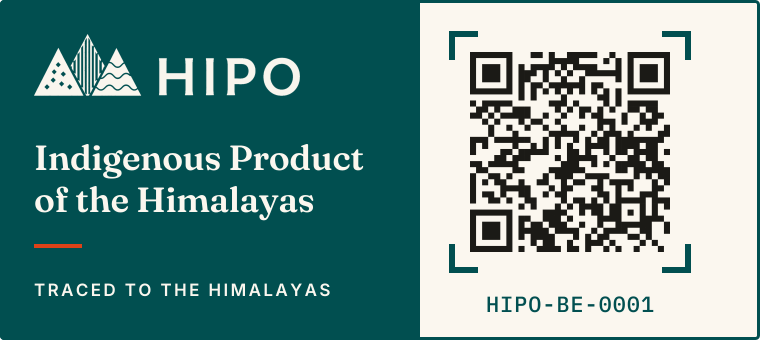
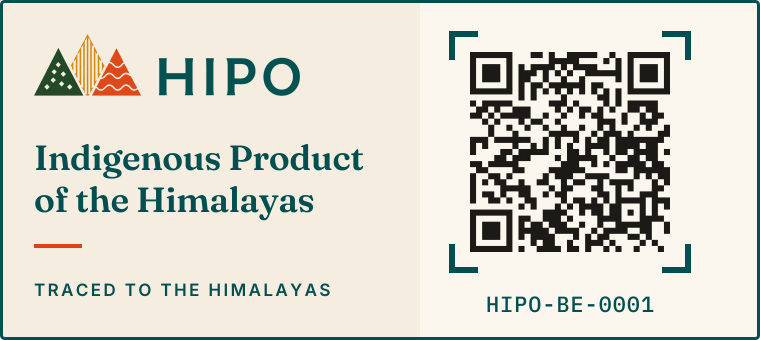
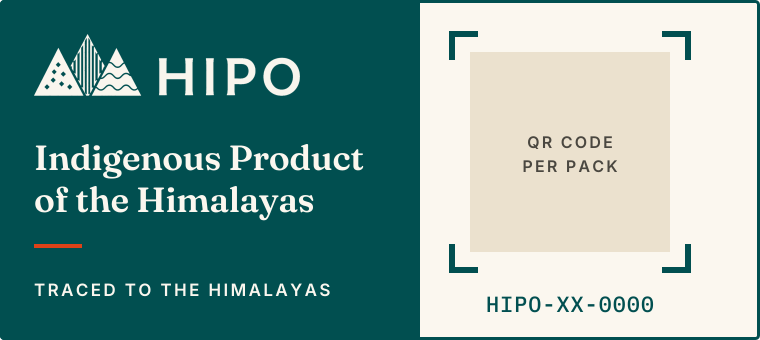
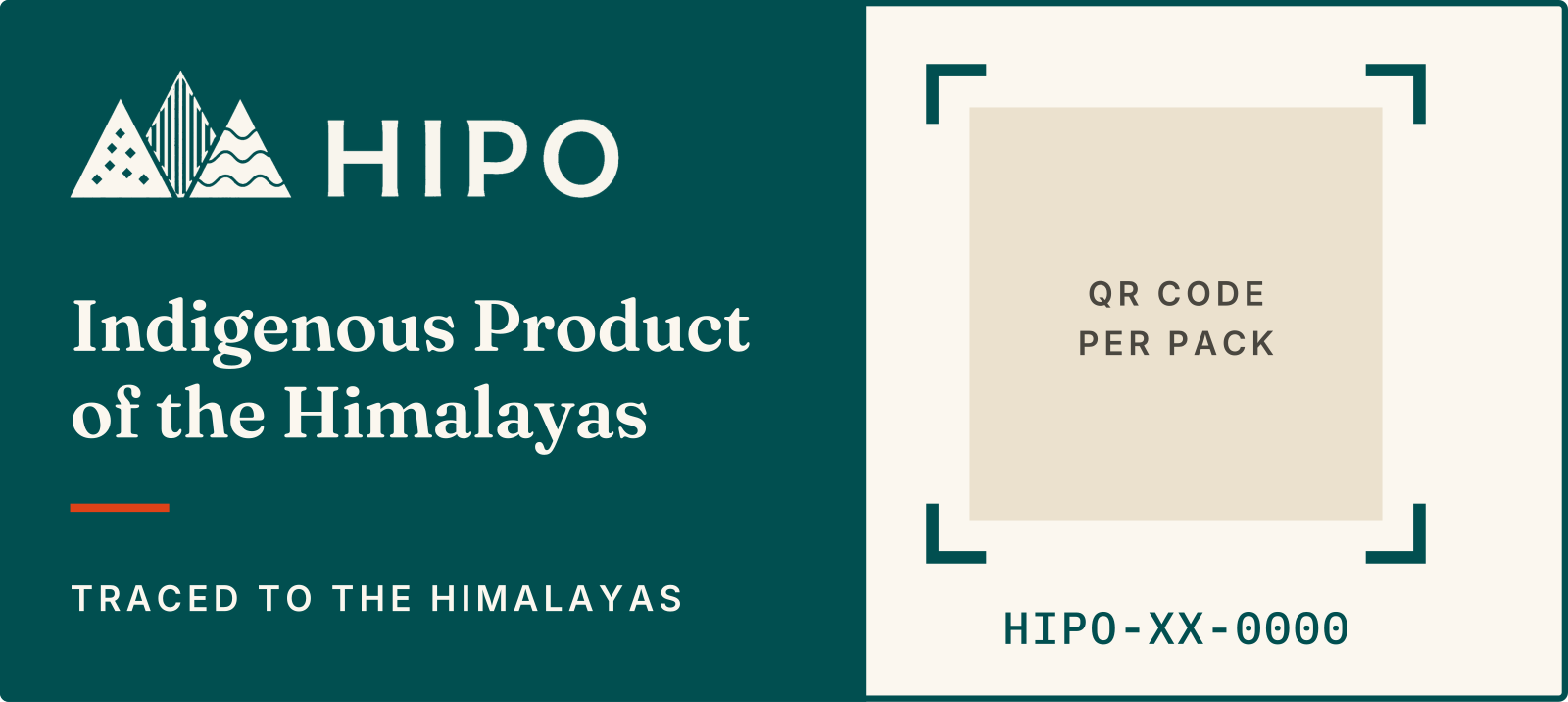
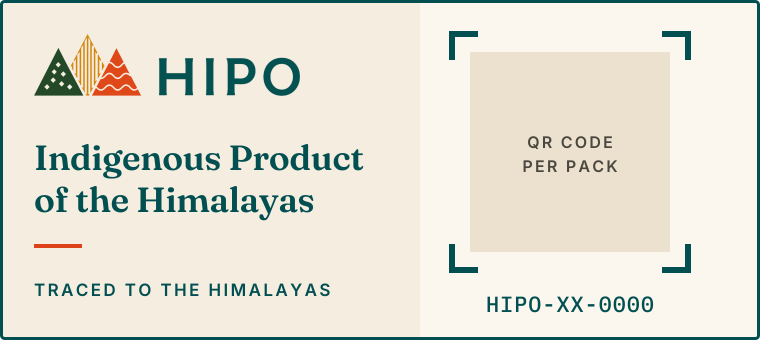
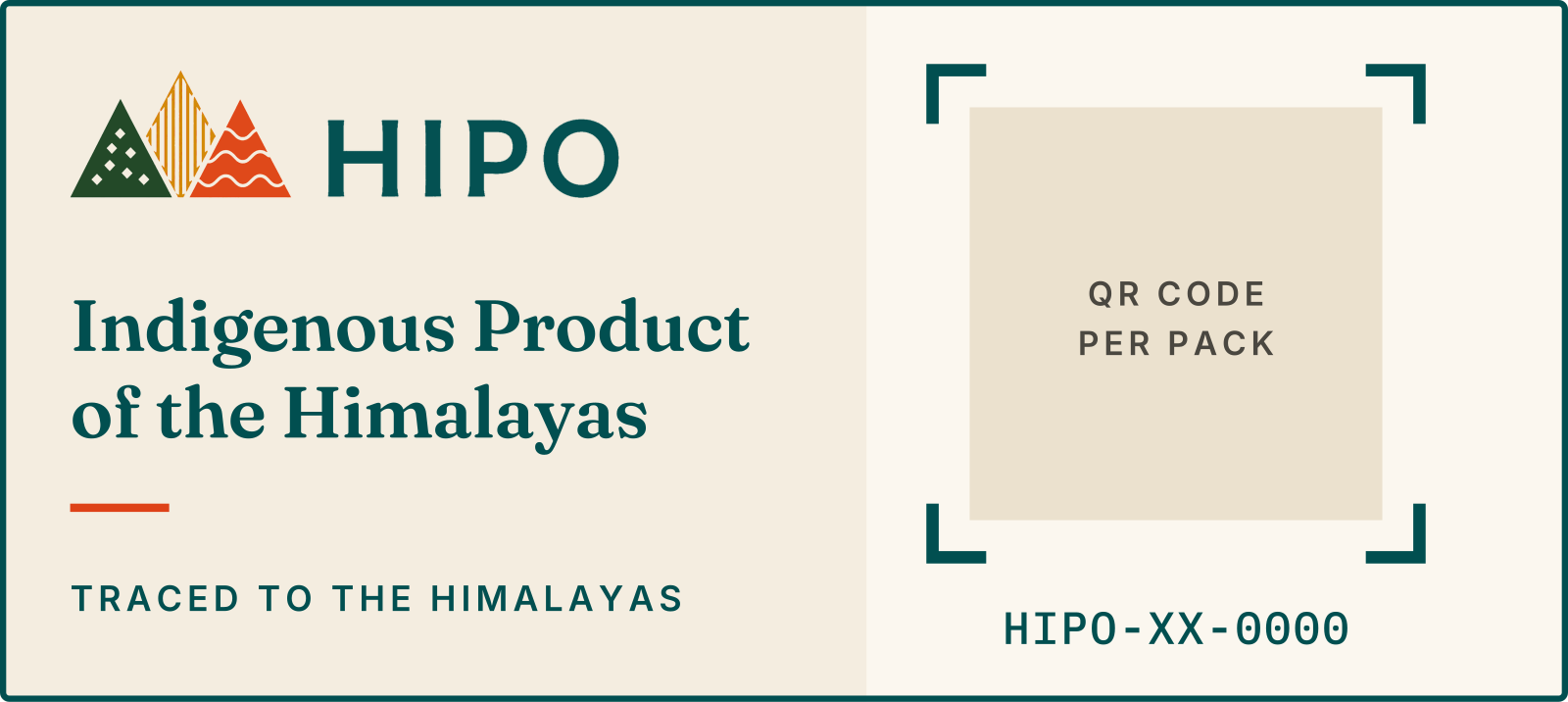
Print templates (QR area left for each pack’s code): Teal SVG · Teal PNG · light SVG · light PNG
The rules around the mark.
A mark is only as good as the rules around it. A formal brand book keeps it consistent, credible and defensible as it spreads across products and years.

- Visual identity
- Construction, colour, clear space, minimum sizes and permitted variants for different packs and materials.
- Usage
- Where the mark may and may not appear, how it sits beside a producer’s own branding, and the wording that must go with it.
- Values and language
- What the mark means and the words used to say it, so every product carrying it says the same thing.
- Safeguards
- Protection against misuse, imitation and unauthorised use, including how misuse is found and what follows.
A code on every pack.
Scanning it shows the product and the producer behind it: origin, community and practice, hosted by HIPO. The website is the single place where verification records are kept.
What a scan shows
What a scan needs
Check a sample record.
Every certified pack will carry a code under its QR. Type one in, or pick a sample (honey, bamboo or a spice), and read what a buyer would see. Records can be valid, under review or revoked.
Wild-forage honey, spring 2026 harvest
- Producer
- Karma Tshering Lepcha
- Community
- Lepcha beekeepers of Lingdong
- Origin
- Lingdong, Dzongu, Mangan district, Sikkim
- Practice
- Kept in log hives with Apis cerana; harvested by hand once a colony is strong
- The mark
- The mark on this pack is valid. Record last checked by HIPO on 12 October 2026.
Sample record. Names and places are illustrative; real producers are named only after certification and with their consent.
Who the mark is for.
Indigenous producers across the Himalayan region: individuals, collectives, cooperatives and community enterprises whose products come from the region and are made under practices their community recognises as its own. The mark is not limited to a sector. Honey, bamboo, spices, grains, tea, fibres, textiles and crafts can all carry it, with a record behind each pack.

- What carrying the mark asks
- Producers agree to be verified, to keep their record accurate and to apply the mark only as the brand book allows. HIPO builds and defends the identity, hosts the record and works on the market the identity opens.
- Eligibility and application
- Criteria and the certification process are being finalised with the brand book and governance framework. Producers and producer organisations can register interest for the first cohort now.
- Why it matters
- Buyers already pay more for provenance they trust. Identity and traceability make Himalayan provenance trustworthy, and let that premium travel back to the producer.
Context.
How provenance labels and pack-level verification are developing in India.
India had 605 registered Geographical Indications in January 2025, and commentators argue every pack should show the GI, the trademark and any certification mark, with pack-level QR records.
Down To Earth, 2025Jammu and Kashmir introduced QR-coded labels to certify hand-knotted carpets, with a printed code for verification if scanning fails.
Kashmir Life
Questions people ask.
Short, direct answers. For anything else, write to hello@hipohimalaya.com.
What is the Indigenous Product of the Himalayas mark?
It is a shared cultural and intellectual identity developed by HIPO. Eligible indigenous producers carry it on their packaging. It signals that a product comes from an indigenous Himalayan producer, made under practices the community recognises as its own, with a verifiable record behind the claim.
Is the mark only for bamboo and honey?
No. Traceability goes beyond bamboo and bees. Any indigenous Himalayan product whose producer is verified, and which is made under practices the community recognises as its own, can carry the mark with a record behind each pack. Spices, grains, tea, fibres, textiles and crafts are all eligible in principle.
How does certification work?
HIPO first verifies the producer and records their community and practice. Only then is the mark issued. The producer applies it as the brand book allows, a QR code is tied to the product, and anyone can scan the code to read the record on hipohimalaya.com.
Who is eligible to carry the mark?
Indigenous producers across the Himalayan region, whether individuals, collectives, cooperatives or community enterprises, whose products come from the region and are made under practices their community recognises. Eligibility criteria are being finalised; producers can register interest for the first cohort now.
What do valid, under review and revoked mean?
Valid means the record matches and the mark can be relied on. Under review means HIPO is re-checking the record and the mark should not be relied on until the review closes. Revoked means the mark has been withdrawn; a pack still carrying it should be reported to HIPO.
Is the mark the same as a GI tag?
No. A Geographical Indication is registered for a named product from a defined place under India's Geographical Indications of Goods Act, 1999. The Indigenous Product of the Himalayas mark is HIPO's own identity for eligible indigenous producers and is backed by a per-pack verification record.
If you produce in the Himalayas, buy from the region or want to support the standard behind the mark, we would like to hear from you.
Join the first cohort.
Producer organisations, collectives and individual producers can register interest now.
Register producer interest